Focused arrival windows
Useful updates and clear arrival timing.
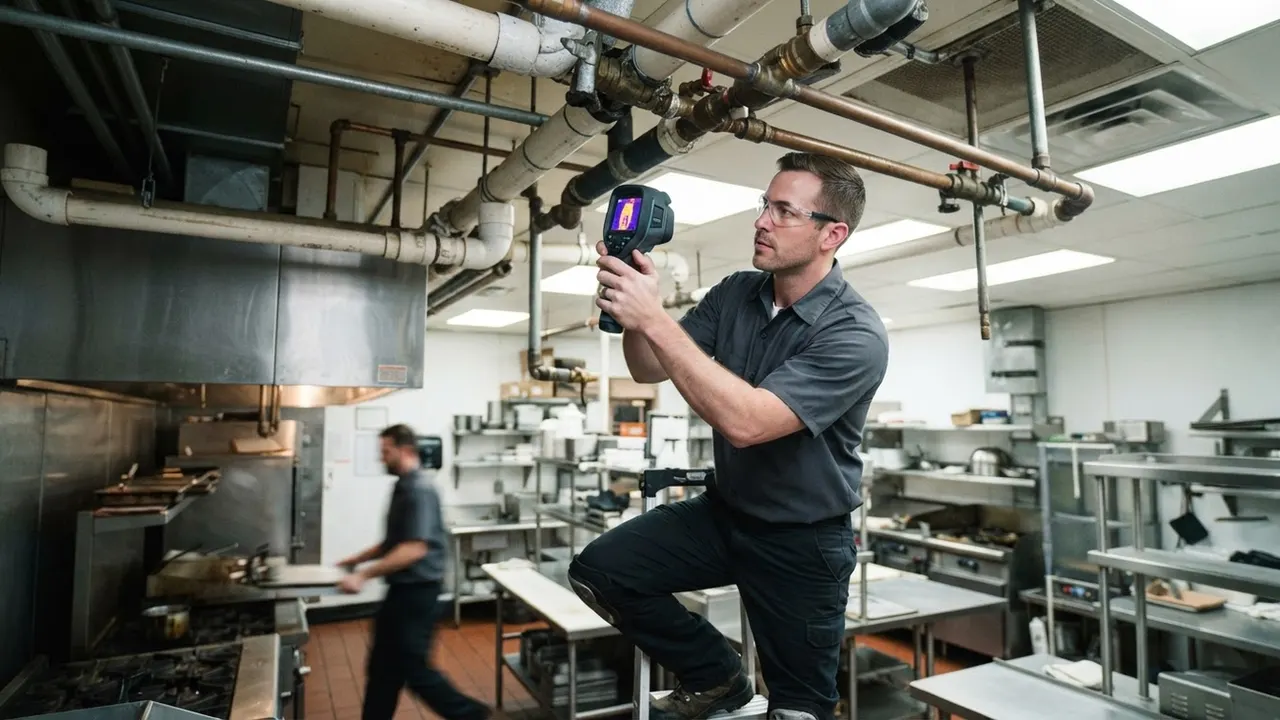
Commercial Leak Detection in Greenville is how local property managers stop silent water loss before it wrecks a slab, a ceiling tile, or a quarterly utility budget. We run acoustic and thermal gear through offices, retail strips, restaurants, and warehouses across Pitt County, then repair what we find. If your water bill spiked or a stain showed up overnight, call us today.
Useful updates and clear arrival timing.
Review the approach and price before deciding.
Equipped vehicles and respectful cleanup.
Neighbors serving neighbors with follow-through.
Every commercial leak detection visit covers the full diagnostic sweep and a written repair scope. If the repair is straightforward, we often handle it the same day. Larger jobs, like a parking lot line replacement, get a separate quote so you can plan the spend.
We isolate the domestic supply and hold it against a pressure testing gauge for at least ten minutes. A slow drop confirms a supply-side leak and tells us whether the loss is inside the building or out at the meter.
A thermal imaging camera maps cool streaks behind walls and under slabs while an acoustic leak detection microphone listens for the hiss of escaping water. The two tools together narrow the target to a small, repairable area.
A pipe locator follows the run and a video pipe inspection camera confirms the material, depth, and condition. You see the footage before we cut, so there is no argument about where the problem sits.
You get a one-page scope with the marked location, the proposed repair method, the materials, and the flat price. No hourly billing, no change orders for tools we should already have on the truck.
After the repair cures, we re-pressurize the line and hold it for 30 minutes. You get before-and-after gauge photos and a moisture meter reading at the repair site so you can document the fix for insurance.
Share what is happening and receive a clear next step from the local team.
Commercial Leak Detection in Greenville is the process of pinpointing hidden water loss inside a business building using non-invasive tools before any concrete or drywall gets opened. We start with a pressure testing gauge on the main, then sweep the structure with an acoustic leak detection microphone and a thermal imaging camera to map temperature anomalies behind walls and under slabs. Once we isolate the signature, a pipe locator and video pipe inspection camera confirm the exact depth and material, whether that is copper pipe, PEX piping, or older PVC pipe.
Greenville buildings take a beating from humid summers and occasional hard freezes. A crawlspace leak under a 1970s brick storefront on Evans Street behaves nothing like a slab leak in a newer medical office off Fire Tower Road. We have worked Pitt County since 2015, so we know which commercial corridors have aging galvanized lines and which new builds hide PEX behind spray foam. When a high water bill shows up without a visible puddle, that is usually an underground water line leak or a running toilet nobody logged.
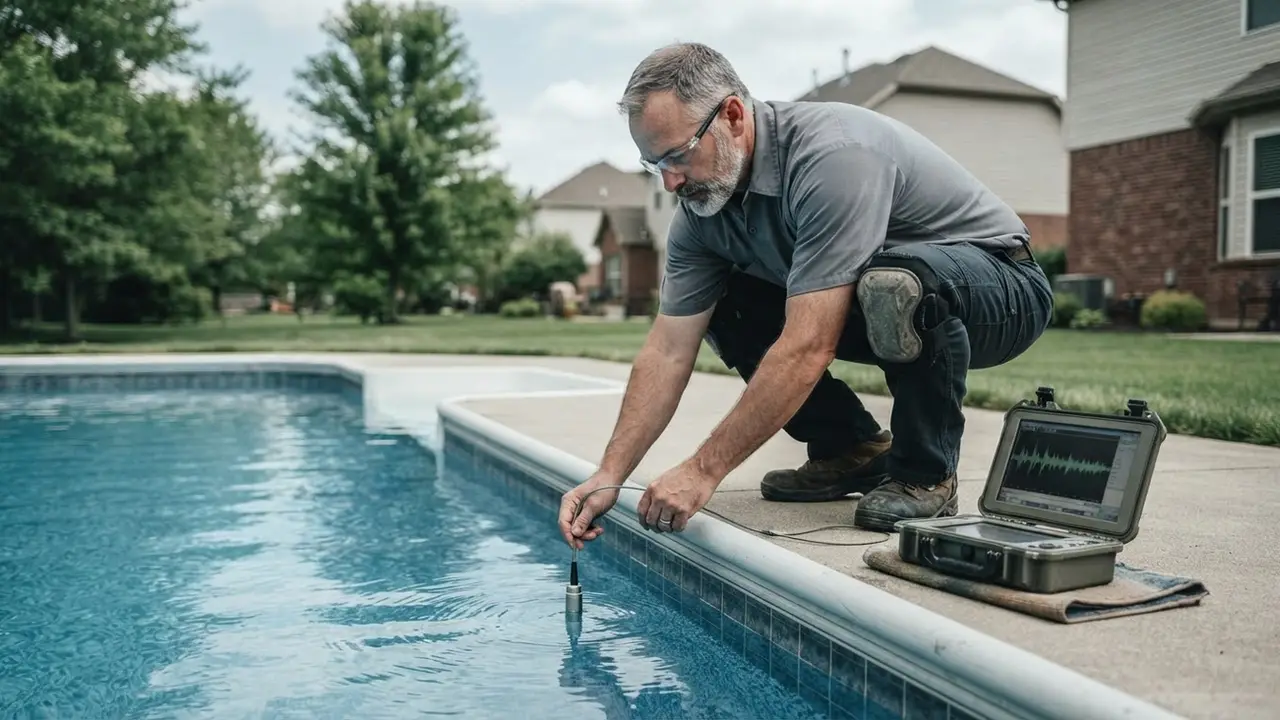
You describe the symptom: a high water bill, a ceiling water stain, a wet patch near the water heater. We ask three or four questions about the building age and meter behavior, then book a window. Emergency calls get a same-day slot whenever the schedule allows.
On arrival we isolate the domestic line and attach a pressure testing gauge. A slow drop over ten minutes tells us the loss is on the supply side. If the gauge holds, we shift attention to drains, irrigation, or fixtures. This step takes about 20 minutes and rules out half the possibilities.
We walk the building with an acoustic leak detection microphone and a thermal imaging camera. Under a slab, the microphone picks up the hiss of pressurized water escaping; the camera shows the cool streak where moisture travels. Together they narrow the target to a two-foot square.
A pipe locator traces the line, and a video pipe inspection camera confirms the material and condition. We mark the floor or wall with painter's tape and photograph the location. You get a written scope with the repair price before we cut anything.
We open the marked area, cut out the failed section, and rebuild it with copper pipe or PEX piping and proper fittings. After the repair cures, we re-pressurize the line and hold it for 30 minutes. You get before-and-after gauge photos and a clean workspace.
Listens for the high-frequency hiss of pressurized water escaping a pipe. It works through concrete, tile, and asphalt, which is why we can find slab leaks without breaking the floor first.
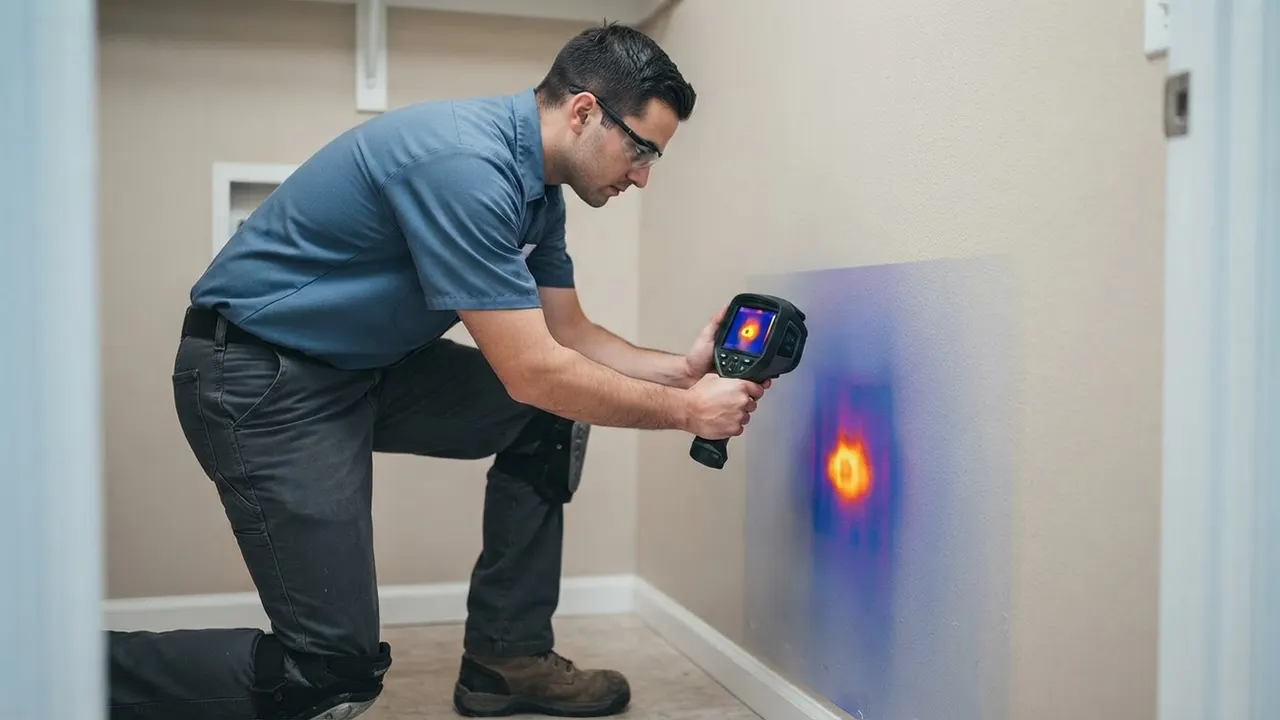
Shows temperature differences behind walls and under slabs. A wet patch reads cooler than dry material, which gives us a visual map of where the moisture is traveling.
Confirms whether the loss is on the supply side. We isolate the line, pressurize it, and watch the needle. A steady drop over ten minutes is a confirmed leak.
Traces the buried line and shows us the inside of the pipe. We confirm material, depth, and the exact failure point before we open anything.
For stubborn lines where acoustic and thermal readings are ambiguous, we introduce a safe tracer gas and sniff along the run. It pinpoints leaks under slabs and in long underground runs.
Gives us a numeric reading on drywall, wood, and insulation. We log readings before and after repair so you have documentation for insurance and maintenance records.
We close valves one at a time and watch the meter or gauge. When the needle stops moving, we have found the zone with the leak. This method is fast, free of demolition, and works on any commercial building with a manifold.
We exhaust acoustic, thermal, and tracer gas options before we cut concrete or drywall. The goal is a two-foot repair window, not a twenty-foot trench. It saves the client money and keeps the building open.
Every repair is re-pressurized and held for 30 minutes. If the gauge moves, we open it back up. You get before-and-after photos so the fix is documented, not just promised.
We rebuild with copper pipe, PEX piping, or CPVC pipe to match the existing system and meet North Carolina plumbing code. Fittings, sealant, and solder are all spec-grade, and we pull permits when the scope requires it.
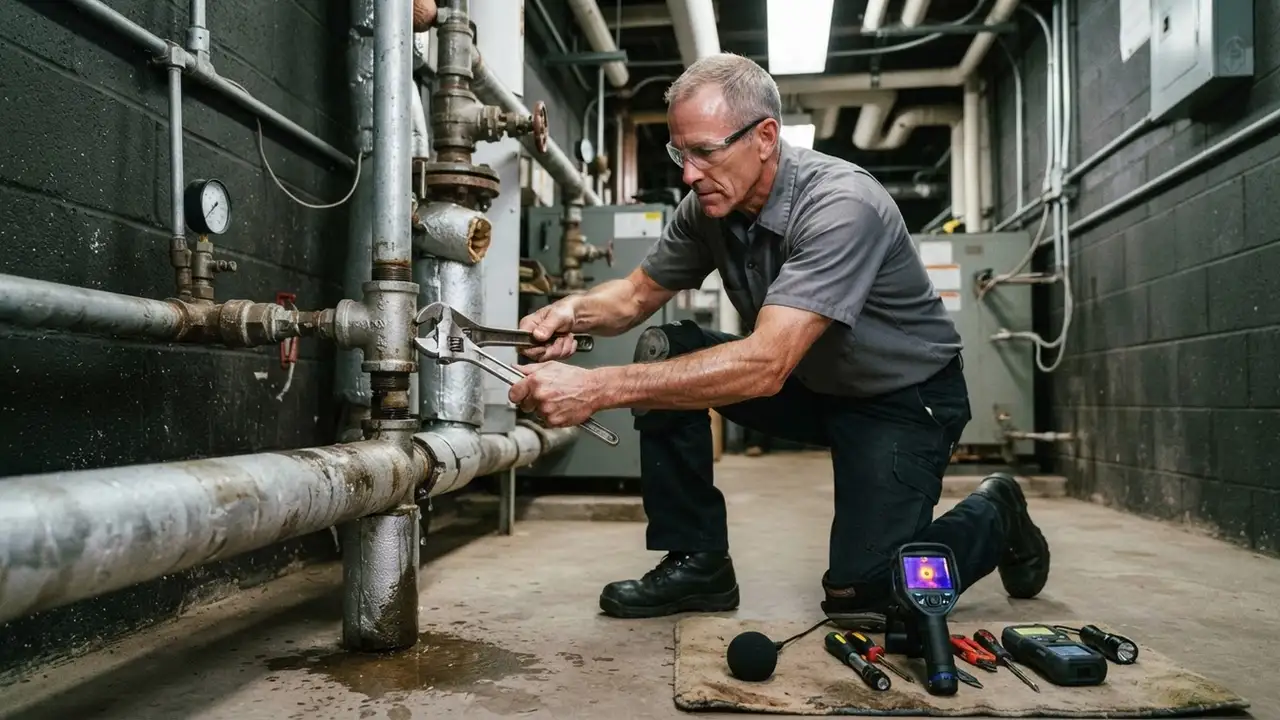
We pressure-test each building's main, then sweep common walls and mechanical rooms with acoustic and thermal gear. Two running toilets and a pinhole copper leak in a riser turned out to be the culprits. Repairs completed in one day, and the next quarterly bill dropped by 38 percent.
We isolate the supply line, pressure-test it, and trace the moisture to a cracked PVC drain joint under the floor. The repair was a two-foot cut and a new fitting. No more morning puddles, and the health inspection passed without a drainage note.
A frozen pipe had split inside the wall. We located it with thermal imaging, cut out the split section, and rebuilt it with PEX piping and new insulation. The line held 80 psi on the retest, and the ceiling was patched the same week.
We isolated each sprinkler zone, pressure-tested the manifold, and found a failed valve and two broken heads. Repairs were done in an afternoon. Water use returned to normal, and the city notice was cleared.
Greenville sits in Pitt County, where the water table is high and the summers are humid enough to hide a slow leak behind a baseboard for months. Winter freezes are short but sharp, and a frozen pipe in an unheated warehouse off Memorial Drive can split overnight. We see three recurring patterns: slab leaks in older brick storefronts downtown, crawlspace leaks in the ranch-style commercial buildings along the 27834 corridor, and irrigation line leaks in the landscaped office parks out toward 28590. Our trucks carry the same acoustic and thermal gear for all three, and we know which ZIPs have the oldest galvanized service lines. If you need commercial leak detection and repair in Greenville NC, we can usually schedule a business water leak repair near me Greenville visit within 24 hours, and emergencies get same-day priority.
Older brick buildings with original copper and galvanized lines. Slab leaks and pinhole failures are common, and we know which blocks have the oldest service laterals.
High-traffic medical offices with constant plumbing use. A running toilet or dripping faucet here can waste hundreds of gallons a day before anyone notices.
Newer commercial construction with PEX piping behind spray foam. Leaks here are usually fitting failures rather than pipe corrosion, and thermal imaging works well.
Smaller commercial strips and agricultural buildings on well and irrigation systems. We see more underground water line leaks and irrigation line leak calls out this way.
Clay holds water against buried lines and hides the surface evidence of a leak. We rely on acoustic and tracer gas tools rather than looking for wet ground.
Frozen pipe events spike in January, especially in unheated warehouses and crawlspaces. We keep burst pipe repair materials on the truck all winter.
Galvanized and early copper lines in downtown Greenville fail at joints and pinholes. We plan for more than one leak on these buildings and test the whole run.
Sprinkler systems run hard from April through October, and a failed valve can waste thousands of gallons. We isolate zones and pressure-test manifolds as part of the sweep.
A 40-unit complex near ECU watched its water bill climb $400 a month for two quarters. Two plumbers had checked the visible fixtures and found nothing.
We pressure-tested each building main and found a slab leak under a ground-floor break room. Repaired the copper line through a two-foot cut and retested at 80 psi. The next bill dropped 38 percent.
Maintenance: We recommended a quarterly meter check and a fixture audit. Catching a running toilet early is the cheapest leak prevention there is.
A restaurant on the 27858 corridor lost its back kitchen to a split pipe during a January freeze. Water was running down the wall behind the walk-in cooler.
We isolated the line, cut out the split section, and rebuilt it with PEX piping and new insulation. The line held pressure on the first retest, and the kitchen reopened the next morning.
Maintenance: We insulated the remaining exposed run and set a space heater recommendation for the mechanical room. No repeat freeze since.
A landscaped office park near 28590 got a city notice about excessive water use. The irrigation system was running three zones a night with no visible wet spots.
We isolated each zone and found a failed valve plus two broken heads. Repairs took an afternoon, and the next month's water use returned to the property's baseline.
Maintenance: We set a spring start-up inspection so the manifold gets checked before the heavy watering season begins.
Most commercial leaks announce themselves in one of four ways. Here is what each symptom usually means and how we handle it.
A silent underground water line leak or running toilet can waste thousands of gallons a month and quietly inflate your operating budget. We pressure-test the supply, check every fixture, and use acoustic gear on the buried line. Once we isolate the loss, we repair it and re-meter the account so you can confirm the drop on the next bill.
Recurring stains usually mean an active supply or drain leak inside the wall cavity, and the drywall will eventually fail or grow mold. We trace the moisture with a thermal imaging camera and moisture meter back to the source, then repair the failed pipe or joint. You get the wall closed up and the stain gone for good, not just painted over.
A slab leak under a retail or office floor can undermine the finish, warp flooring, and force a full tear-out if it runs long enough. Acoustic and thermal tools pinpoint the break, and a pipe locator confirms depth. We make a targeted cut, repair the copper or PEX line, and pressure-test before we pour the patch back.
Greenville humidity plus a crawlspace leak equals rot, insulation failure, and eventually structural damage to joists and subfloor. We inspect the full crawlspace, take moisture meter readings on joists and insulation, and trace any wet supply or drain line to its failure point. Repairs are made in place, and we leave the space drier than we found it.
Most commercial leak detection inspections in Greenville run $250 to $650 in 2026, depending on building size and how many systems we test. A single-line pressure test and acoustic sweep on a small office starts near the low end. Multi-tenant buildings with irrigation and slab lines push toward the top. The repair is quoted separately after we pinpoint the leak.
Yes. We run 24/7 commercial water leak repair Greenville NC dispatch for burst pipe, water heater leak, and flooding emergencies. After-hours rates apply outside 7 a.m. to 6 p.m. weekdays, and we tell you the number before we roll. Restaurants and retail clients usually book after close so the repair does not cost them a day of sales.
We combine a pressure testing gauge, acoustic leak detection microphone, and thermal imaging camera to isolate the loss without demolition. A pipe locator and video pipe inspection camera confirm depth and material. On stubborn lines we introduce a tracer gas leak detector or leak detection dye. The whole sweep usually takes two to four hours on a standard commercial footprint.
Greenville Leak Detection Pros handles both the detection and the repair under one state contractor license, so you are not coordinating two vendors. We cut out the failed section, rebuild it with copper pipe or PEX piping, and re-pressurize the line before we leave. Call +923139383014 and we will book a window, often same-day.
Not seeing your question? Our local team can help you understand urgency, scheduling and what to expect.
Ask the local team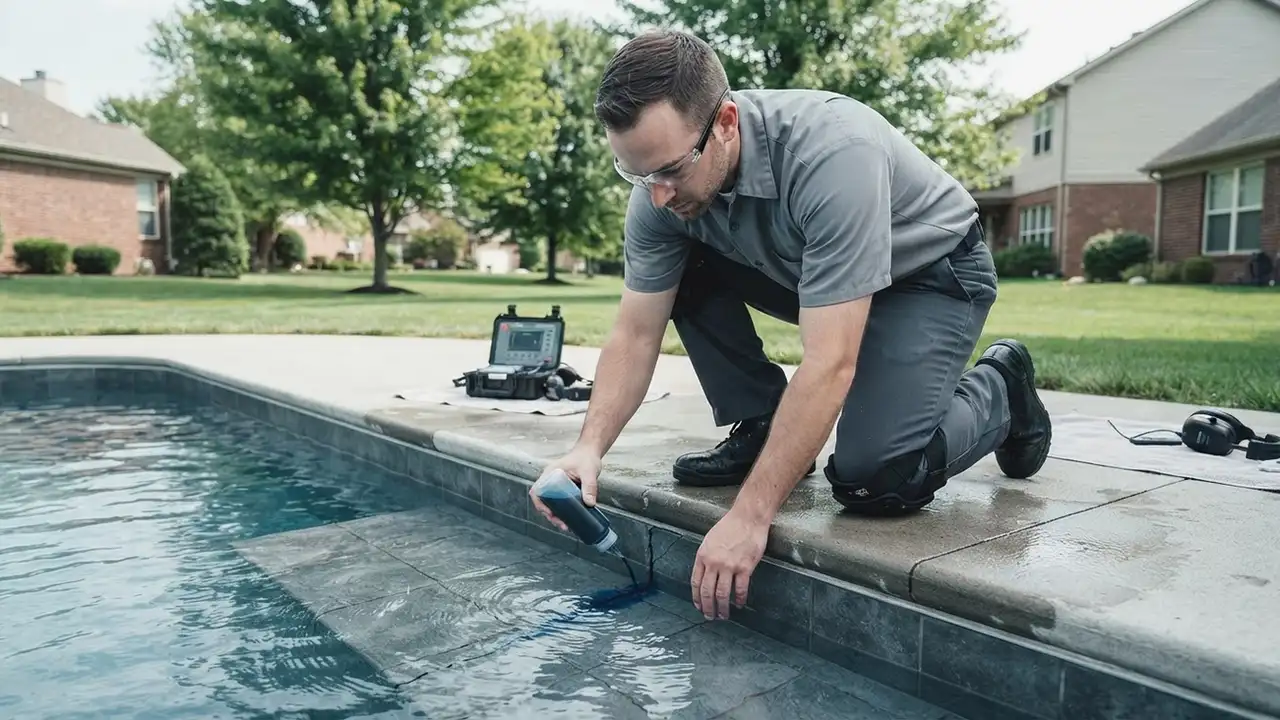
The main supply line is where most commercial losses start. We pressure-test the service line from the meter to the building and repair failed sections before they undermine a parking lot or foundation.
View service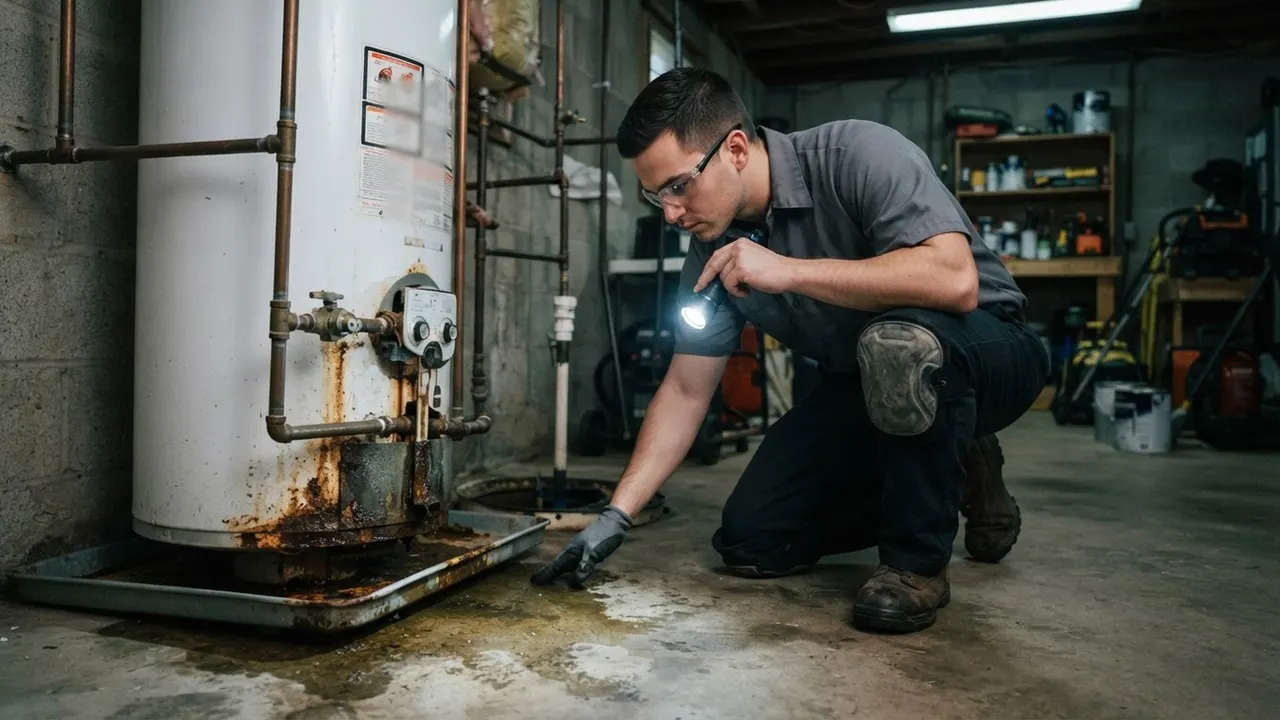
When the meter spins with everything off, we isolate the culprit. This is often the first call we get from Greenville commercial clients, and it usually leads straight into a full leak detection sweep.
View service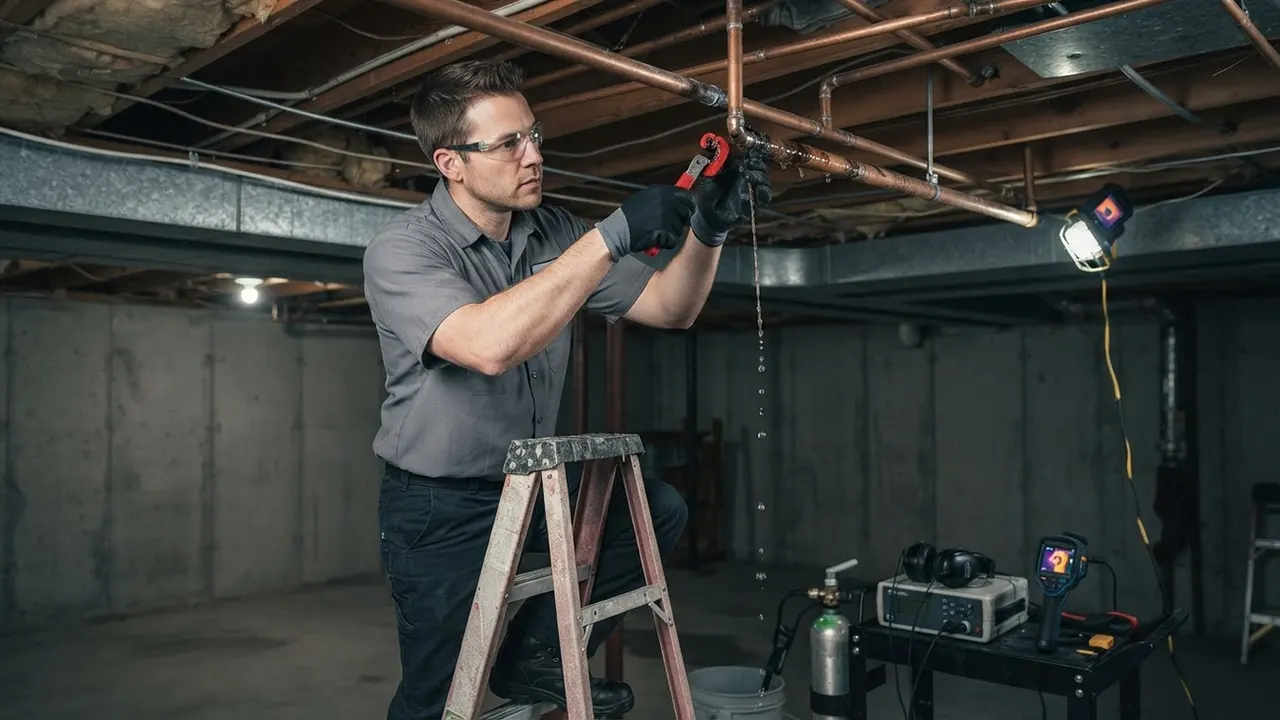
Slab leaks under retail and office floors are common in older Greenville construction. We use acoustic and thermal tools to pinpoint the break, then make a targeted cut instead of a full tear-out.
View service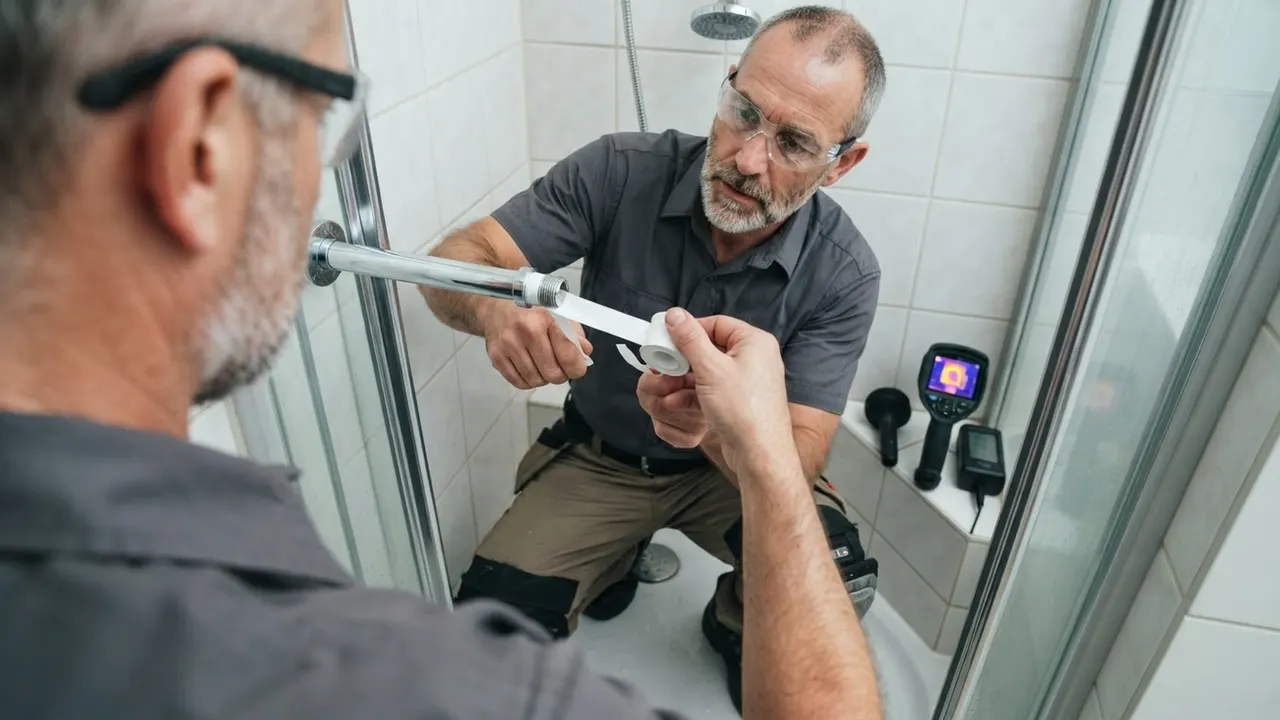
A ceiling water stain is a symptom, not the source. We trace the moisture back through the wall cavity to the actual failure, whether that is a supply line, a drain joint, or a roof penetration.
View service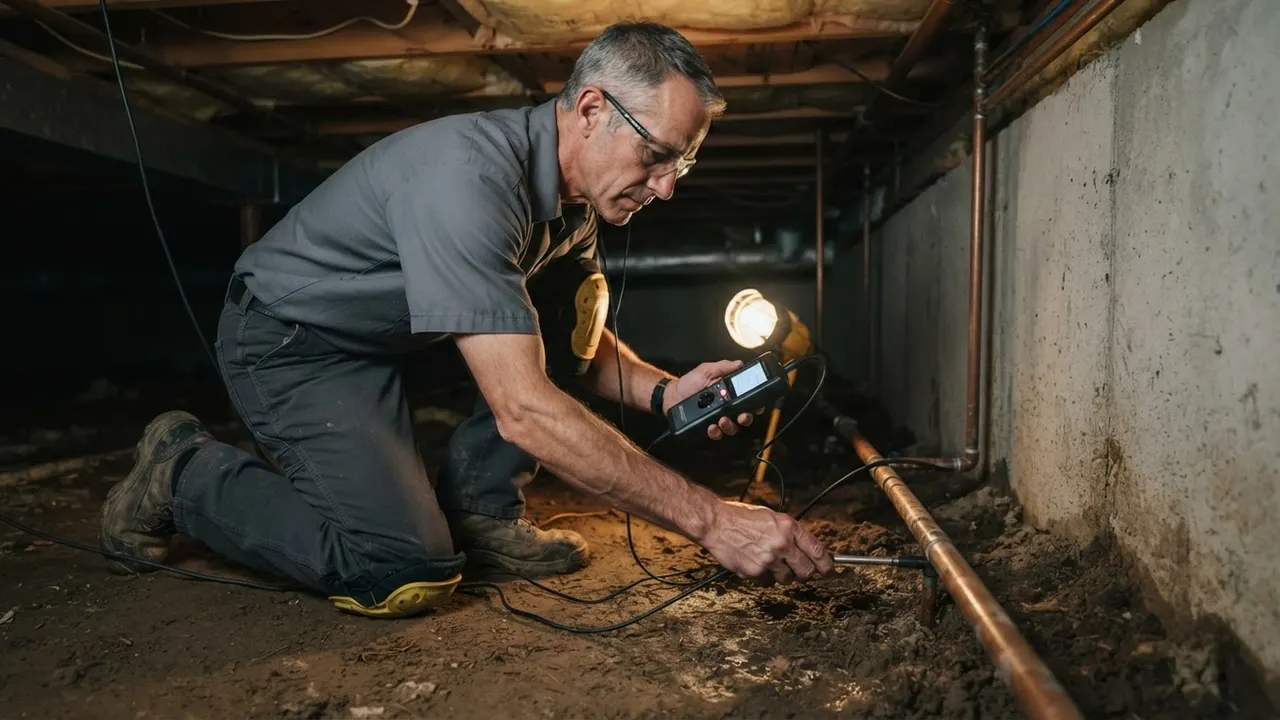
Call +923139383014 and tell us what you are seeing. Our office is open 8 a.m. to 6 p.m. Monday through Friday, and our emergency line runs 24/7 for burst pipes and active flooding. Most Greenville calls get a technician within 60 to 90 minutes. You can also email info@greenvilleleakdetectionpros.com with photos of the leak.