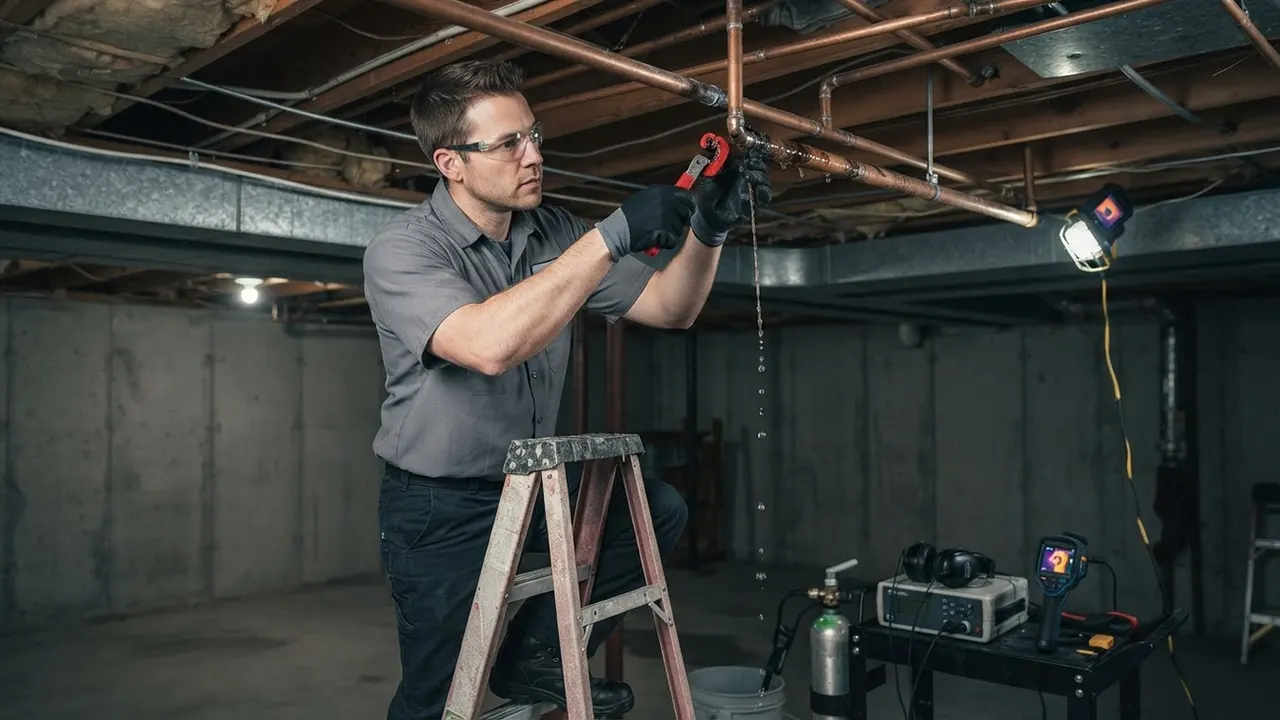
Crawlspace Leaks in Eastern North Carolina Homes: What to Watch For
Crawlspace leaks in Eastern North Carolina are usually caused by high water tables, aging supply lines, and poor drainage. Here are the signs Greenville homeowners should watch for.
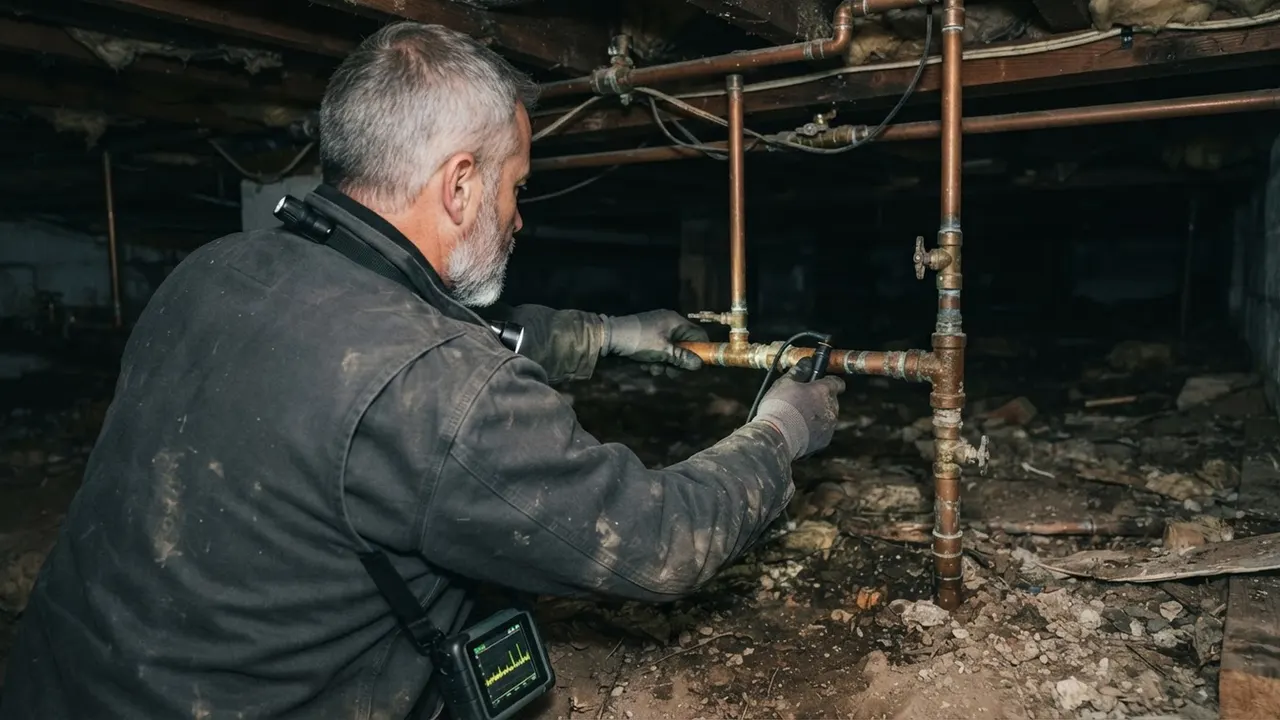
Crawlspace leaks in Eastern North Carolina homes are most often caused by high water tables, aging galvanized or polybutylene supply lines, and poor lot drainage that pushes groundwater against the foundation. If you live in Greenville or anywhere in the Tar-Pamlico basin, the combination of flat terrain, heavy clay soil, and 48 to 52 inches of annual rainfall means your crawlspace is under constant moisture pressure. This post covers the specific causes we see on service calls, the signs that tell you a leak is active right now, and how to tell a plumbing leak apart from simple humidity.
Why Crawlspace Leaks Are So Common in Eastern North Carolina
Eastern North Carolina sits on some of the flattest, wettest ground in the state. From Greenville down through Ayden, Farmville, and Kinston, the water table can sit as little as 18 inches below the surface after a wet winter. When that water table rises, it finds every crack, every pipe penetration, and every failed vapor barrier in your crawlspace.
Homes built before 1990 in Pitt County and the surrounding counties were often plumbed with galvanized steel supply lines. Those pipes corrode from the inside out and typically fail between 40 and 60 years of age. Polybutylene lines, common in homes built between 1978 and 1995, are another frequent culprit - they become brittle and split at fittings under normal water pressure. If your home was built in that window, a crawlspace leak detection Greenville NC inspection is worth scheduling before the next heavy rain season.
The soil itself makes things worse. Eastern NC clay expands when wet and shrinks when dry, and that cycle shifts the ground under your footings. A shift of even half an inch can shear a drain line or pull a supply fitting loose. We see this most often in older neighborhoods around Greenville where the original plumbing has already survived decades of soil movement.
What Causes Crawlspace Leaks in Eastern North Carolina
There are six causes we find over and over on crawlspace leak calls in this region. Knowing which one fits your situation saves time and money.
- Failed supply lines. Galvanized steel, polybutylene, and even early CPVC lines crack at joints. A pinhole leak at 60 PSI can release 20 to 30 gallons per day into the soil.
- Clogged or broken drain lines. Cast iron drain pipes under older Greenville homes rust through from the bottom. You may not see standing water - the soil just stays dark and damp.
- High water table intrusion. After a wet fall, groundwater can rise through the crawlspace floor. This is not a plumbing leak, but it causes the same damage.
- Poor grading and downspout discharge. If your gutters dump within 3 feet of the foundation, you are watering your own crawlspace.
- HVAC condensate lines. A clogged condensate drain in the air handler can dump 5 to 20 gallons a day under the house during summer.
- Failed vapor barrier. A torn or missing 6-mil polyethylene barrier lets ground moisture evaporate straight into the joists.
Each cause has a different fix. A supply line leak needs a plumber. A grading problem needs a landscaper or a French drain. A vapor barrier needs replacement. The first step is figuring out which one you actually have.
Crawlspace Leak Signs Greenville Homeowners Should Never Ignore
Crawlspace leak signs in Greenville usually show up inside the living space before you ever see water under the house. The crawlspace is out of sight, so your nose, your floors, and your water bill become the early warning system.
Watch for these signals:
- Musty or earthy smell that gets stronger in summer and after rain.
- Soft or springy spots in hardwood floors near bathrooms, kitchens, and laundry rooms.
- Baseboards that cup or pull away from the wall - a classic sign of moisture wicking up from below.
- Condensation on cold water pipes in the crawlspace, or sweating ductwork.
- A water bill that jumps 10 to 30 percent without a change in habits.
- Visible mold or white, chalky efflorescence on the foundation walls.
- Pest activity - ants, termites, and rodents all seek out damp wood.
One or two of these signs can be explained by humidity alone. Three or more together almost always means an active leak. If your water bill has climbed but you cannot find a fixture leaking inside, a high water bill leak detection Greenville NC visit will usually trace it to the crawlspace or the main line within an hour.
How to Find Crawlspace Leaks in Greenville NC
Finding a crawlspace leak in Greenville NC starts with a process of elimination, not guesswork. We follow the same sequence on every call because it works.
Step 1: Shut off everything and watch the meter
Turn off all fixtures and appliances, then watch the leak indicator on your water meter for 10 minutes. If it moves, you have a leak on the pressurized side. If it does not move, the leak is likely on a drain line or is groundwater intrusion.
Step 2: Isolate the irrigation and pool systems
Irrigation lines and pool plumbing run underground and can leak into the same soil under your house. We pressure-test those zones separately. A irrigation leak detection Greenville NC check is quick and rules out a very common false alarm.
Step 3: Inspect the crawlspace directly
We look for staining on joists, dripping fittings, damp insulation, and the telltale dark line where water has been running along a pipe. Thermal imaging and acoustic listening equipment pick up leaks that are hidden behind insulation or under a vapor barrier.
Step 4: Confirm with pressure testing
Once we suspect a section of line, we isolate it and pressure-test. This confirms the leak location before we cut anything open. Typical 2026 pricing for a full crawlspace leak detection in this area runs $250 to $450, and most repairs add $150 to $600 depending on access and pipe material.
Common Mistakes Homeowners Make With Crawlspace Moisture Leaks
The most expensive mistake we see is treating a plumbing leak like a humidity problem. Homeowners buy a dehumidifier, run it for a year, and the leak keeps running. The dehumidifier just fights a losing battle while the joists keep rotting.
Other mistakes:
- Assuming a damp crawlspace is normal. It is common in Eastern NC, but it is not harmless. Wood rot starts at 20 percent moisture content; mold starts around 60 percent relative humidity.
- Sealing the vents without fixing the source. Encapsulation is a good long-term move, but only after any active leak is repaired. Sealing over a leak traps moisture against the wood.
- Ignoring a small drip. A drip at one drop per second wastes about 3,000 gallons per year and keeps the soil under your house saturated.
- Hiring a general handyman for a pressurized line. Supply line repairs need a licensed plumber and a proper pressure test afterward.
- Not checking the water heater. A failing water heater leak repair Greenville NC call often starts as a slow seep that runs under the vapor barrier and goes unnoticed for months.
If you catch a leak early, the repair is usually a few hundred dollars. If you catch it after the floor joists have rotted, you are looking at structural repair that can run into the thousands.
When to Call a Professional for Crawlspace Leak Detection
Call a professional when you have ruled out the obvious - running toilets, dripping faucets, and irrigation - and the moisture is still there. That is the point where guesswork gets expensive.
We also recommend a professional inspection when:
- Your water bill has been climbing for two or more billing cycles.
- You smell musty air in the house even with the HVAC running.
- You see standing water in the crawlspace after dry weather.
- Your home was built before 1995 and has never had a plumbing inspection.
- You are buying a home in Greenville and want the crawlspace checked before closing.
Our team at Greenville Leak Detection Pros uses acoustic listening, thermal imaging, and pressure testing to pinpoint the leak without tearing up your floors. We find it, fix it, and verify the line holds pressure before we leave. If you are outside the city, we also cover Leak detection in Winterville NC and the surrounding Pitt County communities.
Frequently Asked Questions
What causes crawlspace leaks in Eastern North Carolina?
The most common causes are corroded galvanized or polybutylene supply lines, cracked drain pipes, high water table intrusion after heavy rain, and clogged HVAC condensate lines. Poor grading and failed vapor barriers make all of these worse. In Greenville, the flat terrain and clay soil keep groundwater close to the foundation year-round.
How do I know if my crawlspace is leaking in Greenville NC?
Watch for a musty smell, soft floors, baseboard separation, and a water bill that climbs 10 to 30 percent without explanation. If your water meter moves with all fixtures off, you have a pressurized leak. Three or more of these signs together almost always means an active leak.
Are crawlspace leaks common in Greenville North Carolina?
Yes. Greenville gets 48 to 52 inches of rain per year and sits on flat, clay-heavy ground. Homes built before 1995 with original plumbing are the most likely to develop leaks. We see active crawlspace leaks on roughly one in four inspections in this area.
Who fixes crawlspace leaks in Eastern NC?
A licensed leak detection and plumbing company should handle pressurized line leaks, drain line breaks, and water heater failures. Greenville Leak Detection Pros covers Greenville, Winterville, Ayden, Farmville, Washington, and Kinston. We locate the leak, repair it, and pressure-test the line before we leave.
Get Help With Leak Detection in Greenville
If you have ruled out the obvious and the moisture under your house is still there, we can find it. Our team handles Leak detection Greenville NC for homeowners across Pitt County and the surrounding region.
Call Greenville Leak Detection Pros at +923139383014 to schedule a crawlspace inspection. We will pinpoint the leak, give you a clear price before we start, and fix it the same day whenever possible.